Urgent Alert: In late September 2026, severe torrential monsoon rains have triggered localized flash floods across Greater Bangkok (Min Buri, Lat Krabang, Vibhavadi, Chatuchak) and Rayong province (Pluak Daeng, Khao Chamao), directly hitting domestic koi ponds and live ornamental fish logistics.
1. Crisis in the Backyard: Overflows, Escaped Koi, and Water Shock
Discussions across Thai koi keeping forums and social networks highlight three critical threats currently unfolding in flooded communities:
- Prized Koi Escapes: Flush-level garden ponds have overflowed where standard drainpipes could not match rainfall volume. High-value Japanese Nishikigoi have been reported swimming onto flooded garden lawns or escaping into municipal canals.
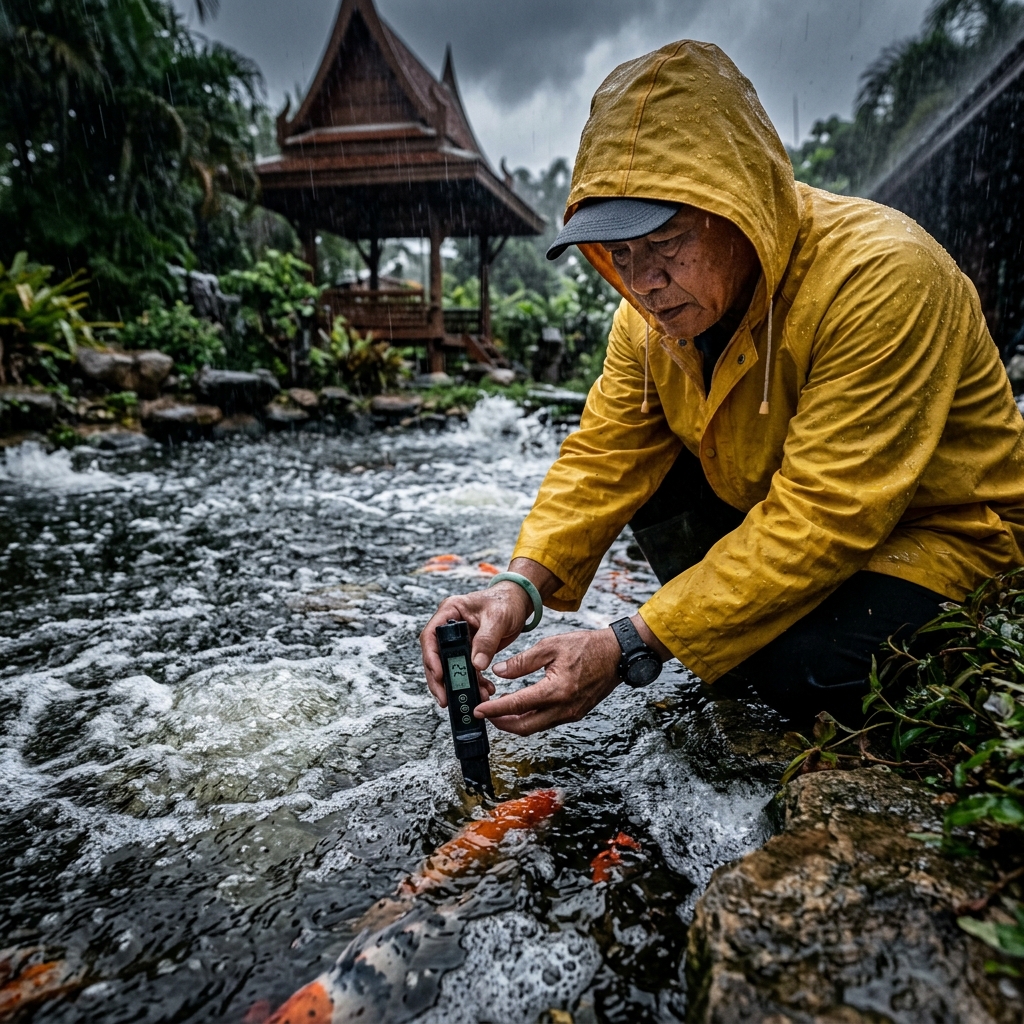
- Rainwater Shock & pH Crash: Large volumes of acidic, mineral-stripped tropical rain cause sudden drops in temperature, pH, and carbonate hardness (KH). Fish experience acute osmotic shock, clamp their fins, gasp at the surface, and become vulnerable to bacterial infections.
- Toxic Garden Runoff: Overflowing soil, lawn fertilizer, and street drain backflow can contaminate ponds, causing rapid ammonia spikes and foul, foamy water surfaces.
2. 5 Immediate Emergency Actions for Pond Keepers
- Install Perimeter Mesh Netting: Secure a green safety net (at least 50–100 cm high) around the pond edge immediately to prevent fish from jumping or swimming out as water levels crest.
- Stop Feeding Completely: During cold, torrential storms, a fish’s digestive metabolism slows drastically. Uneaten pellets will rapidly decompose and trigger lethal ammonia spikes.
- Maximize Aeration: Run air pumps and blowers at full power. Vigorous surface agitation prevents rainwater stratification (cold rainwater staying layered on top) and expels harmful dissolved gases.
- Dose Natural Sea Salt (0.1–0.3%): Adding 1 to 3 kg of pure, un-iodized sea salt per 1,000 liters (1 ton) of pond water supports fish osmoregulation and mitigates gill damage caused by soft rainwater.
- Inspect Electrical Safety: Ensure all pump plugs, aerators, and extensions are elevated above potential flood lines to eliminate electrocution risks.
3. Market Logistics & Chatuchak District Alert
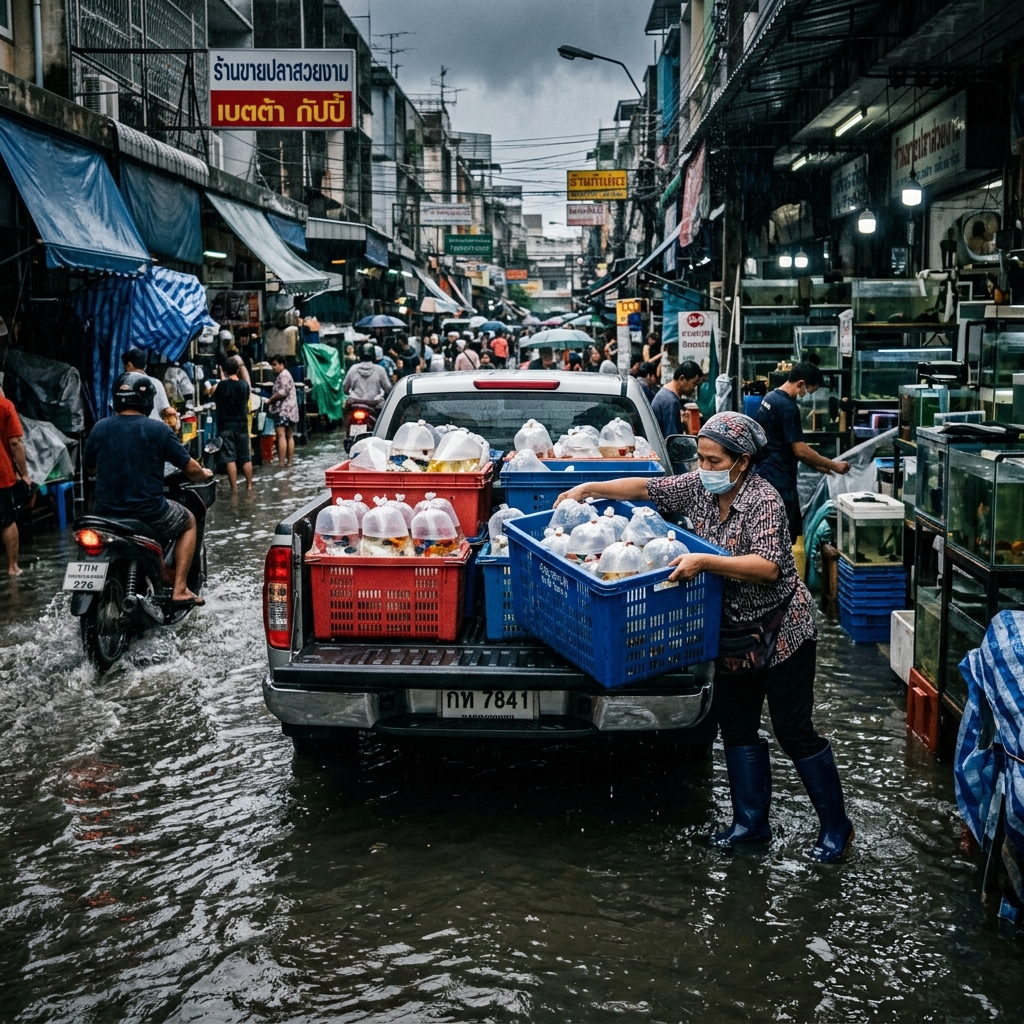
Key transport arteries around Bangkok’s primary ornamental fish hub (Chatuchak/JJ Mall district) have experienced deep standing water. Traffic congestion poses a serious risk to live fish consignments in oxygenated bags running low on dissolved oxygen.
Breeders and buyers are advised to postpone non-critical long-distance dispatches, and local hatcheries in low-lying zones are reinforcing perimeter dikes to maintain biosecurity.